Beyond ten years: what keeps implants healthy — and a simple soft‑tissue step that helps
Recent long‑term evidence confirms high 10‑year implant survival but shows outcomes depend on modifiable factors; new histology suggests staged crestal soft‑tissue augmentation gives better peri‑implant tissue dimensions.
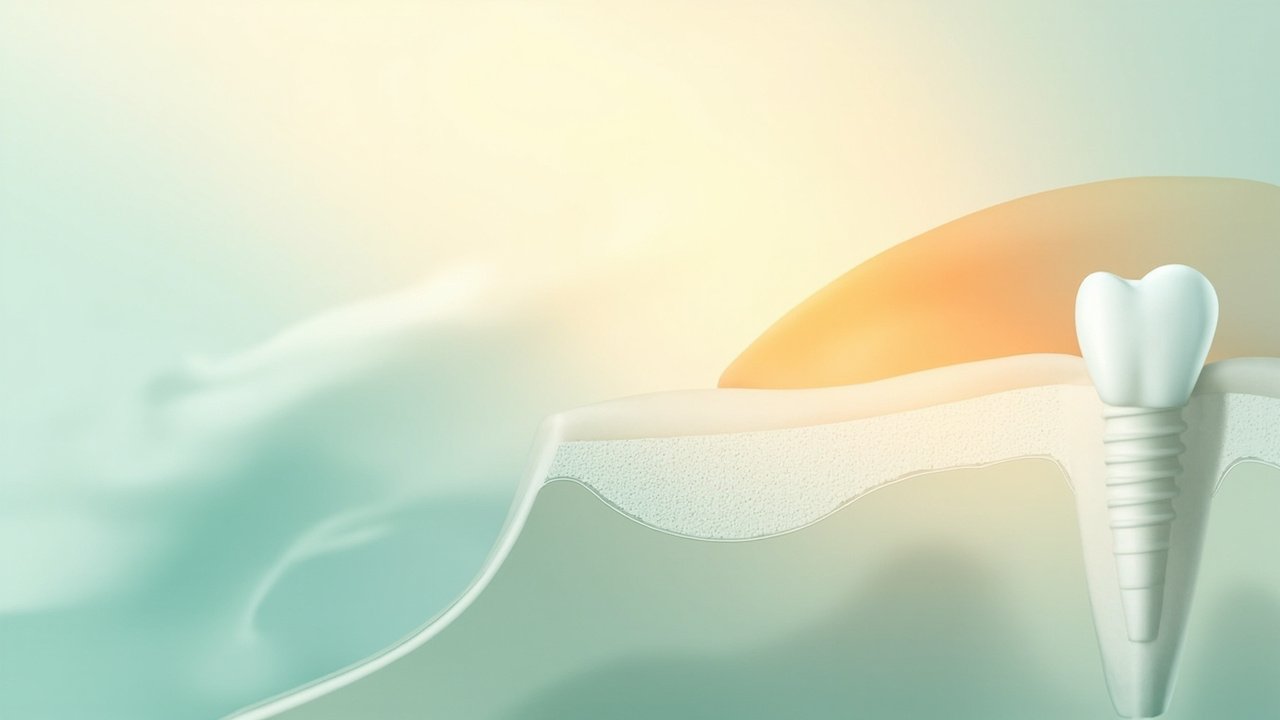
If your practice places implants for ordinary partial or single‑tooth cases, the big picture from recent long‑term literature is reassuring: most modern implants still survive past ten years in the vast majority of patients, but “survival” is not the same as “health.” Systematic reviews and long cohort studies report 10‑year implant survival commonly in the low to mid‑90s percent range, while marginal bone changes and biological complications remain the main long‑term threats. ([pocketdentistry.com](
That leads to three practical implications for Monday morning: first, patient selection and behaviour matter. Smoking and poor plaque control consistently show up as the clearest modifiable risk factors for late biological problems, and a history of periodontitis raises the risk of peri‑implant bone loss unless patients remain in regular maintenance. Supportive periodontal/peri‑implant therapy (regular recalls and cleaning) is associated with markedly better long‑term outcomes. In short: your recall strategy and how you handle smokers and periodontitis history influence whether an implant merely survives or stays healthy. ([pubmed.ncbi.nlm.nih.gov](
Second, prosthetic and surgical choices that are cheap shortcuts now can cost later. Overcontoured crowns, poor emergence profiles, cement excess and platform mismatches increase the chance of inflammation and difficult hygiene zones; simple design rules (cleanable emergence profile, screw access when feasible, eliminate cement excess at crown seating) remain high‑value actions for private clinics. The literature repeatedly shows technical complications contribute to late failures and to episodes that provoke bone loss. ([pmc.ncbi.nlm.nih.gov](
Third, soft‑tissue management matters and you can choose pragmatic timing. A new experimental histological study compared crestal soft‑tissue augmentation performed before flapless implant placement versus simultaneous augmentation and other controls; the staged approach (autogenous graft placed before implant insertion with a later flapless implant) produced more favourable peri‑implant soft‑tissue dimensions in that model. While animal and short‑term human trials cannot prove a long‑term clinical benefit yet, this supports a simple clinic strategy: when you expect a thin biotype or limited keratinized mucosa, consider staging a soft‑tissue augmentation before implant placement (or at least plan for a predictable augmentation at a second stage) rather than forcing augmentation at the same operative time. That step is low‑tech (connective tissue graft or FGG) and fits modest clinic workflows. ([pubmed.ncbi.nlm.nih.gov](
How to act this week: identify patients at higher long‑term risk (smokers, untreated or poorly controlled periodontitis, poor hygiene, heavy bruxers), discuss the difference between survival and long‑term health when you get consent, and set a recall plan (risk‑based: 3–12 months) you and your patient can keep. When planning single implants in the aesthetic zone or sites with thin mucosa, weigh a staged soft‑tissue graft (healing first, implant later) as a low‑tech option to improve tissue thickness and future access for hygiene. Keep prosthetic contours simple and inspect for cement at seating. These small, routine steps are what the long‑term data say preserve health beyond ten years. ([pocketdentistry.com](
Limitations and honest caveats: pooled survival figures hide substantial heterogeneity between studies (different implant designs, prosthetic protocols, definitions of peri‑implantitis, and variable maintenance). The histological study provides biologic plausibility for staged augmentation, but it is not a long‑term randomized clinical trial in humans — so use the finding as a pragmatic nudge, not a mandate. Finally, survival percentages are encouraging, but your goal should be healthy, maintainable peri‑implant tissues, not just keeping the implant in the mouth. ([doi.org](
Clinical takeaways
- Ten‑year survival is common (low‑ to mid‑90s percent) but survival ≠ health — focus on preventing peri‑implantitis with hygiene, smoking cessation and regular recall.
- Identify high‑risk patients (smoking, history of periodontitis, poor hygiene) and set a documented, risk‑based maintenance plan before implant placement.
- If soft tissue is thin, consider staging a crestal soft‑tissue augmentation before flapless implant placement or plan a predictable second‑stage graft — a low‑tech step that can improve tissue dimensions and make long‑term hygiene easier.
Sources
- Ten years and beyond: Long-term dental implant survival, success, and biological health. Periodontology 2000 (2026). DOI: 10.1111/prd.70098
- Effect of Crestal Soft-Tissue Augmentation Prior to or Simultaneously With Implant Placement on Peri-Implant Tissue Dimensions: Histological Outcomes of an Experimental In Vivo Study. Journal of Clinical Periodontology (2026). DOI: 10.1111/jcpe.70211
- Evaluation of survival and success rates of dental implants reported in longitudinal studies with a follow-up period of at least 10 years: a systematic review. (systematic review summary) (2017)
- Long-Term Incidence of Peri-Implant Conditions: 25-Year Results of The Bernese Prospective Cohort Study. (cohort study) (2025)
- Supportive Periodontal Therapy Improves Implant Survival in Patients With a History of Periodontitis: A Retrospective Multicenter Cohort Study. Journal of Clinical Periodontology (2026)