Short implants to convert free‑end RPDs: practical 3‑year lessons for the busy clinic
A new 3‑year prospective cohort and recent engineering data show short (6 mm) implants are a pragmatic way to stabilise mandibular free‑end removable partial dentures — with predictable survival but real prosthetic and bone‑level trade‑offs that change everyday planning and maintenance.
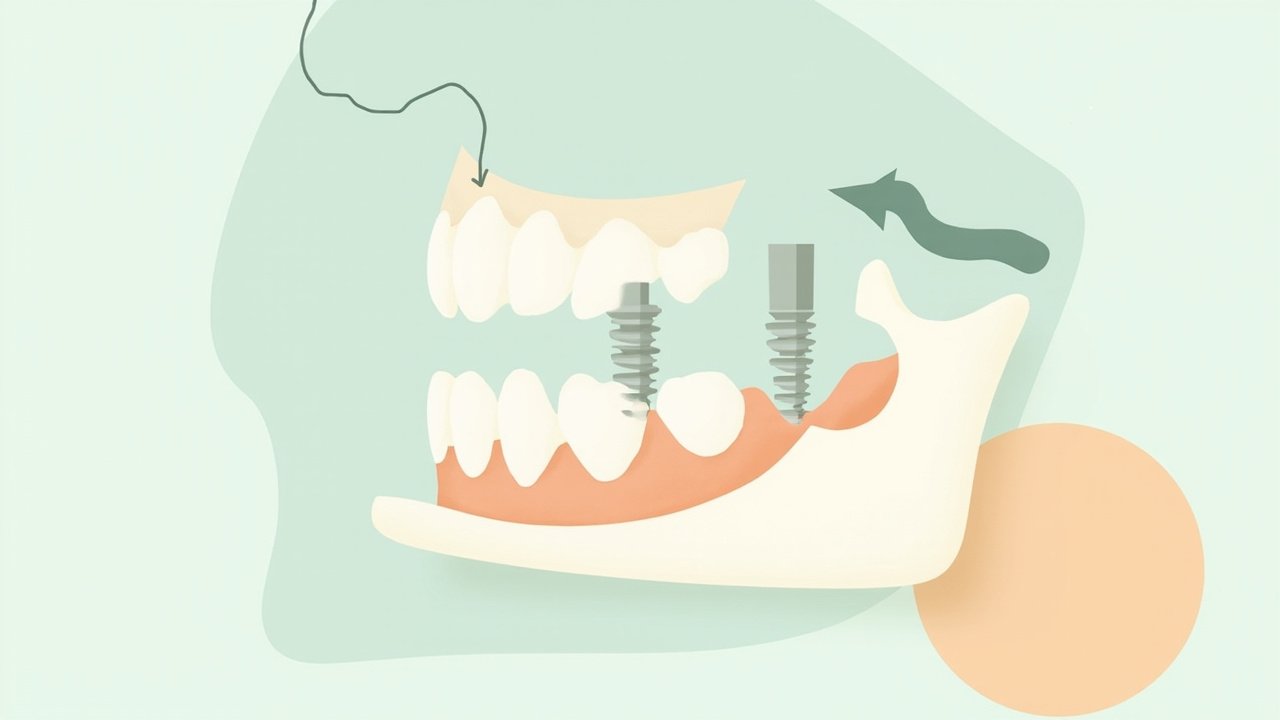
Many of our patients still use removable partial dentures because fixed options are unaffordable or bone is limited. A pragmatic strategy gaining stronger clinical evidence is to place short implants in the posterior mandible as “strategic” abutments to convert a Kennedy class I (bilateral free‑end) RPD into an implant‑assisted RPD. A new 3‑year prospective cohort published this week reports favourable clinical outcomes when short implants are used for this purpose, reinforcing earlier one‑year and cohort data from the same groups. ([doi.org](
What matters for your chair on Monday is threefold: survival, bone changes, and prosthetic behaviour. The recent 1‑year prospective cohort of 6‑mm implants placed bilaterally in molar sites reported 100% implant survival at one year, with mean marginal bone level change around 1.05 mm and a clinical success rate slightly lower when using a strict radiographic bone‑loss cut‑off because a few implants exceeded 2 mm crestal loss. That same programme’s newer 3‑year report continues to show that short implants are a viable way to give posterior support where placing longer implants or performing grafting is undesirable or costly. ([pubmed.ncbi.nlm.nih.gov](
Two prosthetic lessons follow from the clinical papers and the new finite element analysis of attachment geometry. First, abutment choice and loading protocol matter: the Enkling group’s studies compared retentive (ball) and non‑retentive (dome) abutments and used a soft‑loading protocol during the early months; patient‑reported outcomes and peri‑implant parameters suggested both abutment concepts are workable but careful soft loading and follow‑up reduce early overload risks. Second, a 2026 FEA that modelled bar versus ball attachments at different vertical heights showed that raising the attachment/bar height increases stress transferred to implants and peri‑implant bone — a mechanical reason to keep attachment height low and to avoid excessive cantilevers on the converted prosthesis. ([pmc.ncbi.nlm.nih.gov](
How to put this into practice in a modest clinic: plan for two short (6 mm) implants placed in bilateral molar/premolar positions when the RPD is the realistic long‑term prosthesis; use a soft‑loading approach and delay full tightening/retention until initial healing; choose abutments to match the patient’s hygiene and manual dexterity (dome/non‑retentive if poor dexterity, retentive if able to maintain hygiene); and aim to keep attachment/bar vertical height as low as the prosthetic space allows to reduce bending forces. Maintain close recall for hygiene and relining — early marginal bone changes are possible and can be picked up with simple standardized radiographs. ([pubmed.ncbi.nlm.nih.gov](
Limitations and what to watch for. The strongest new paper is a prospective cohort rather than a large randomized trial, so selection and operator effects are possible. Short implants reduce the need for grafting, but they do not eliminate biological risk: a small proportion of implants may show >2 mm bone loss in the first year. Prosthetic complications — clip wear, need for relines, tooth caries on remaining abutments — still occur and may actually fall but not vanish after implant support; so emphasise maintenance, check occlusion and extension, and manage expectations. Finally, FEA gives direction on mechanics but cannot replace clinical judgement about anatomy and occlusion. ([doi.org](
Clinical takeaways
- Short 6‑mm implants can convert a bilateral free‑end RPD into an implant‑assisted RPD with good medium‑term survival — consider this when grafting or fixed rehab is not feasible. ([doi.org](https://doi.org/10.1111/%28ISSN%291600-0501?utm_source=openai))
- Use a soft‑loading/controlled‑loading approach and choose abutments to match the patient’s hygiene and dexterity; monitor marginal bone with standardized radiographs at baseline, 6 months and yearly. ([pubmed.ncbi.nlm.nih.gov](https://pubmed.ncbi.nlm.nih.gov/35234748/))
- When designing the prosthesis keep attachment/bar vertical height low and avoid long cantilevers — higher attachment heights increase bending stress to implants and peri‑implant bone. ([pubmed.ncbi.nlm.nih.gov](https://pubmed.ncbi.nlm.nih.gov/42825618/?utm_source=openai))
Sources
- Short Dental Implants as Strategic Support for Removable Partial Dentures in Mandibular Free‑End Situations: A 3‑Year Prospective Cohort Study. Clinical Oral Implants Research (2026). DOI: 10.1111/clr.70184
- Stress analysis of mandibular implant‑supported overdenture retained with bar and ball attachments of different heights: A comparative finite element study. Journal of Indian Prosthodontic Society (2026). DOI: 10.4103/jips.jips_76_26
- Soft Loading Protocol of Short Strategic Implants in Posterior Mandibles Supporting Removable Bilateral Free‑End Prostheses: 1‑year Results of a Prospective Cohort Study. International Journal of Prosthodontics (2023). DOI: 10.11607/ijp.7827
- Short strategic implants for mandibular removable partial dentures: One‑year results from a pilot randomized crossover abutment type study. Clinical Oral Implants Research (2021). DOI: 10.1111/clr.13815