Sticky bone (extended) versus bovine xenograft for anterior horizontal ridge augmentation: what the new randomized trial means for your chair
In a small randomized trial (anterior maxilla, simultaneous implants) extended sticky‑bone gave bigger immediate volume but shrank more — at six months both approaches had similar implant stability and clinical outcomes.
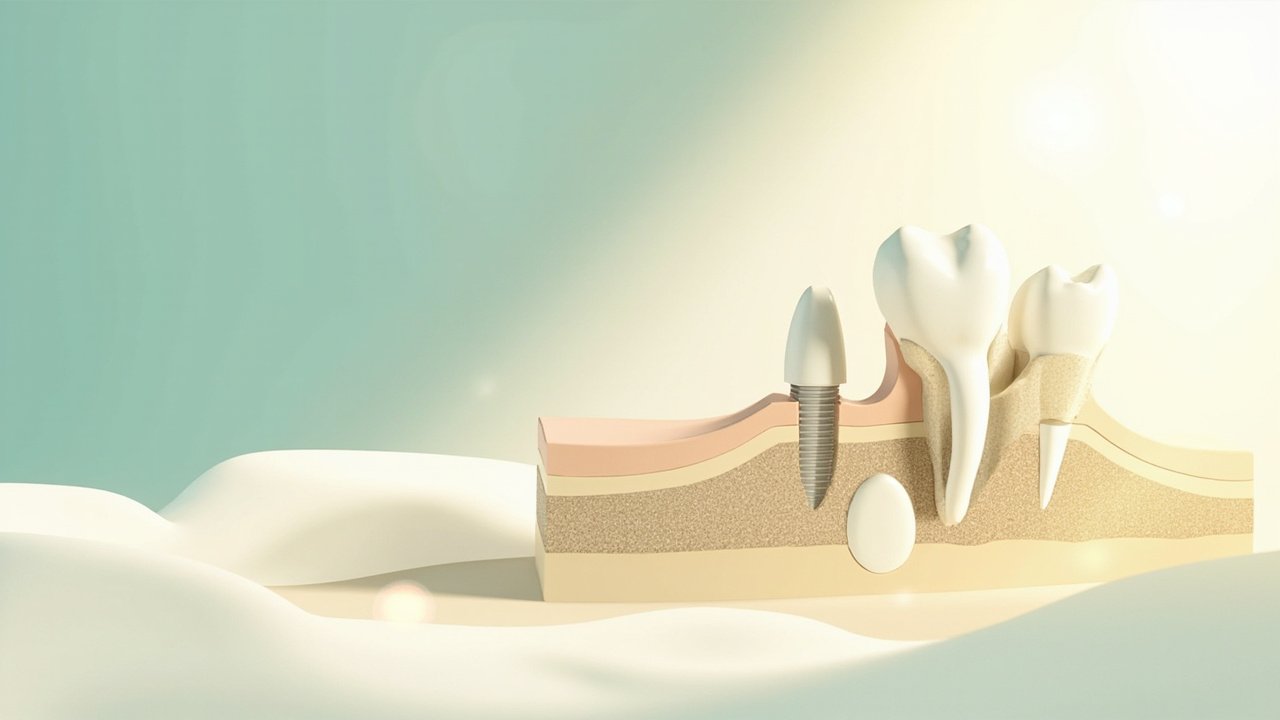
A recent randomized clinical trial from Mansoura University compared a commercially available Medpark bovine particulate graft with an “extended sticky bone” (ESB, marketed as Bio‑Bone) used for horizontal ridge augmentation at the anterior maxilla at the time of implant placement. Sixteen patients were randomized (8 per group); implant survival was 100% and implant stability increased in both groups by 6 months. CBCT volumetric measures were taken preoperatively, immediately after surgery and at 6 months. ([link.springer.com](
The headline result is simple and directly applicable: ESB produced a larger immediate postoperative bone volume (statistically significant), but it lost more volume between the immediate postoperative scan and the 6‑month scan, so that at 6 months the two groups showed comparable bone volume and clinical measures. In other words, ESB gives you a “fuller” immediate post‑op appearance but more of that gain is remodelled in the first months; both approaches left clinicians with stable implants and acceptable soft‑tissue healing at 6 months. ([link.springer.com](
Why this matters in a busy, resource‑conscious clinic: sticky‑bone techniques (particulate graft + i‑PRF or PRF‑gel) are low‑cost, use only blood draw and particulate graft material, and are mouldable. A prior randomized CBCT trial also showed that sticky‑bone (xenograft + i‑PRF) produced meaningful horizontal gains and in some settings performed well without an additional collagen membrane — this supports the idea that a fibrin‑stabilized graft can act as a space‑stabilising, biologically active matrix in small to moderate horizontal defects. Those findings were from small trials and the evidence base is still modest, but they align with the new Mansoura RCT. ([pmc.ncbi.nlm.nih.gov](
How to use this evidence in practice on Monday morning: pick the technique to match the clinical need and the patient’s priorities. If you want a bulky immediate contour (for provisional aesthetics or to reduce chair‑time shaping a block), ESB will give a larger immediate fill — expect more shrinkage between weeks and months. If your goal is predictable long‑term ridge width and you face a thin soft‑tissue envelope or cannot guarantee tension‑free primary closure, a particulate xenograft with careful space maintenance (membrane, tenting screws or titanium mesh) may be more reliable. The trial supports simultaneous implant placement in selected anterior cases when primary stability and flap closure are achievable; implants survived and ISQ rose in both groups at 6 months. ([link.springer.com](
Practical tips and cautions: when you use ESB, take care to (1) avoid over‑augmentation beyond the soft‑tissue envelope — early bulk can look good but may resorb and compromise papillae if the flap is tight; (2) stabilise the material to prevent micromotion because the fibrin matrix adds workability but limited long‑term structural support; and (3) set patient expectations: explain that immediate appearance often improves but then remodels. Conversely, if you choose xenograft plus membrane, pay attention to membrane fixation and the risk of exposure in the anterior aesthetic zone. Finally, remember this is a small single‑centre RCT (n=16) with 6‑month follow‑up — useful, but not definitive. Larger, longer trials are needed. ([link.springer.com](
Bottom line for Southeast Asian clinics: extended sticky‑bone is a practical, low‑tech way to achieve good immediate bulk and acceptable 6‑month outcomes for selected simultaneous‑placement cases, but you should expect greater early resorption than with a standard bovine particulate approach; choose based on the defect size, soft‑tissue limits and the patient’s aesthetic priorities. Use space‑maintenance strategies (tenting screws/mesh) where you must preserve long‑term ridge width. ([link.springer.com](
Clinical takeaways
- Extended sticky‑bone (Bio‑Bone) gives larger immediate postoperative ridge volume but tends to resorb more by 6 months; both methods showed similar implant stability and survival at 6 months. ([link.springer.com](https://link.springer.com/article/10.1186/s12903-026-09431-y?utm_source=openai))
- Use ESB when you need immediate mouldable bulk (shorter surgical time, lower material cost) but expect early remodelling; use membranes, tenting screws or mesh if long‑term space maintenance is essential. ([pmc.ncbi.nlm.nih.gov](https://pmc.ncbi.nlm.nih.gov/articles/PMC9590014/))
- Simultaneous implant placement was feasible in this trial when primary stability and tension‑free closure were achieved — assess each case rather than applying a blanket ‘always wait’ rule. ([link.springer.com](https://link.springer.com/article/10.1186/s12903-026-09431-y?utm_source=openai))
Sources
- Horizontal ridge augmentation in maxillary esthetic zone using bovine bone graft versus extended sticky bone with simultaneous implant placement: a randomized clinical study. BMC Oral Health (2026). DOI: 10.1186/s12903-026-09431-y
- CBCT Evaluation of Sticky Bone in Horizontal Ridge Augmentation with and without Collagen Membrane—A Randomized Parallel Arm Clinical Trial. Journal of Functional Biomaterials (2022). DOI: 10.3390/jfb13040194