Apical bone coverage after lateral sinus lift: why >2 mm makes a practical difference
A 2026 retrospective study of 195 implants found that having more than 2 mm of apical bone coverage after lateral sinus floor elevation is strongly protective for implant survival — a simple radiographic threshold to check before you close and plan follow‑up.
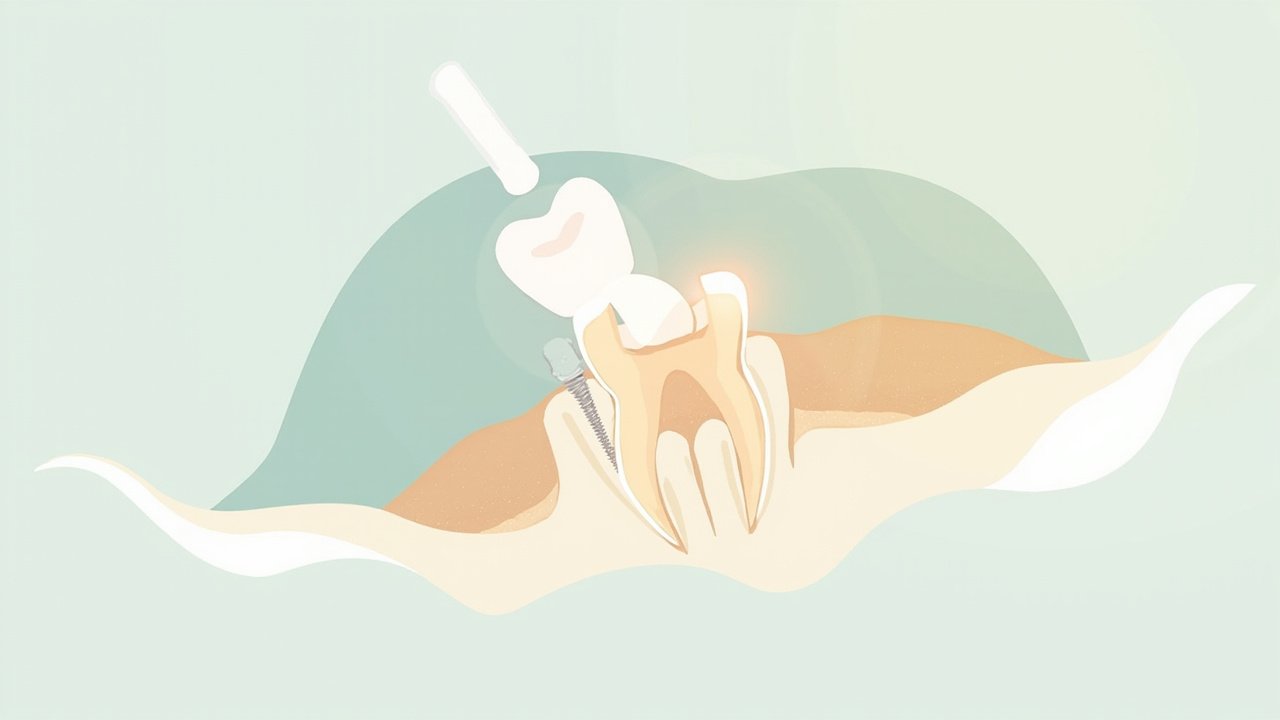
The question ‘how much apical graft coverage is enough?’ is one we face every week when doing lateral sinus floor elevation (LSFE) with simultaneous implant placement. A new retrospective cohort of 195 implants published in Clinical Oral Investigations measured apical bone height (ABH) immediately after surgery, at six months and at two or more years, and compared outcomes for sites with ABH ≤2 mm versus >2 mm. The authors report that ABH falls substantially in the first six months and keeps decreasing thereafter, and that ABH >2 mm was an independent, strong protective factor for implant survival in multivariable models. (Clinical Oral Investigations 2026). ([visualize.jove.com](
Clinical takeaways
- Measure apical bone height on your immediate postoperative radiograph or CBCT; if ABH is ≤2 mm, treat the site as higher risk and plan closer follow‑up. ([visualize.jove.com](https://visualize.jove.com/42696071-apical-bone-coverage-and-implant-survival-after-lateral-sinus-floor-elevation-a-retrospective-study?utm_source=openai))
- When ABH ≤2 mm is unavoidable, consider a staged approach (allow graft consolidation before placing/ loading the definitive restoration) or alternative strategies (short implants, two‑stage LSFE) rather than routine simultaneous one‑stage loading. ([link.springer.com](https://link.springer.com/article/10.1186/s12903-026-09647-y?utm_source=openai))
- Document ABH at T1 and recheck at 3–6 months; early loss of apical gain is common, so early intervention (longer healing, delayed loading, or re‑augmentation) can be planned before late failure occurs. ([visualize.jove.com](https://visualize.jove.com/42696071-apical-bone-coverage-and-implant-survival-after-lateral-sinus-floor-elevation-a-retrospective-study?utm_source=openai))
Sources
- Apical bone coverage and implant survival after lateral sinus floor elevation: a retrospective study. Clinical Oral Investigations (2026). DOI: 10.1007/s00784-026-07101-5
- Residual bone height and implant survival after lateral sinus floor elevation: a continuous-variable analysis with 14‑year follow‑up. BMC Oral Health (2026). DOI: 10.1186/s12903-026-09647-y
- Effect of the implant apical exposure and coverage < or ≥ 2 mm bone graft on transcrestal sinus floor elevation: a 1- to 7-year retrospective cohort study. Clinical Oral Investigations (2023). DOI: 10.1007/s00784-023-04974-8
- Long‑term outcomes of lateral sinus floor elevation: a machine‑learning analysis, systematic review, and meta‑analysis of predictive factors. Periodontology 2000 (2026). DOI: 10.1111/prd.70028